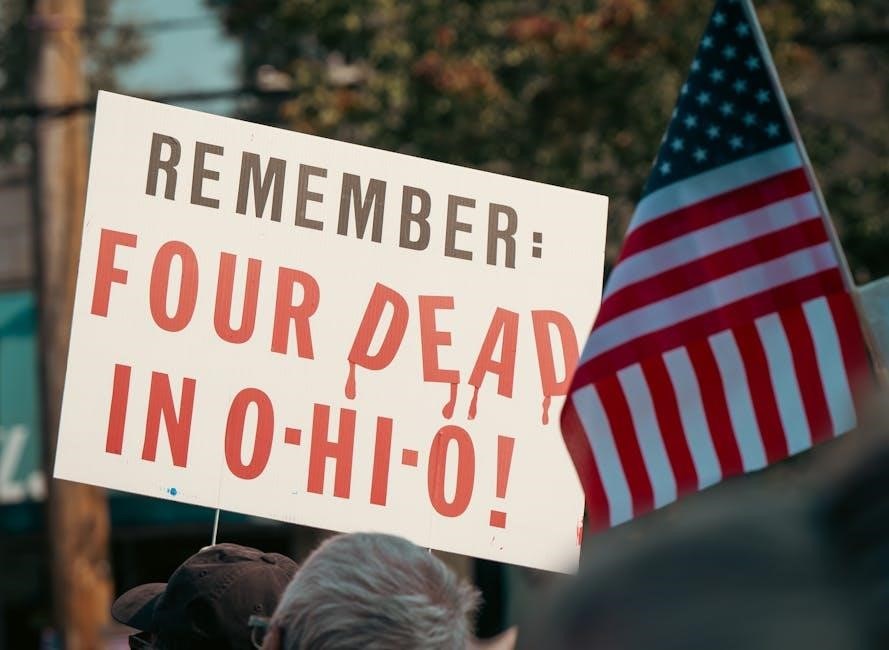
Do I Have a Right? Amendment Study Guide — Article Plan
This guide explores fundamental constitutional rights, utilizing resources from the Bill of Rights Institute, Gilder Lehrman, iCivics, and Rutgers Law School.
Navigating the landscape of American freedoms begins with recognizing the bedrock principles enshrined in the Constitution and its amendments. This study guide, drawing from resources like the Bill of Rights Institute and iCivics, aims to demystify these rights. Understanding your constitutional protections – from freedom of speech to the right against unreasonable search – is crucial for active citizenship.
It empowers individuals to engage with the legal system and advocate for their liberties. This exploration will provide a foundational understanding of these vital safeguards.
What is the Bill of Rights?
The Bill of Rights comprises the first ten amendments to the United States Constitution, ratified in 1791. These amendments were born from concerns about potential governmental overreach, ensuring fundamental rights are protected. Resources from the Gilder Lehrman Institute highlight its core purpose: limiting the power of the federal government.
It guarantees essential freedoms like speech, religion, and the right to a fair trial. Understanding these amendments is paramount to comprehending the scope of individual liberties within the American legal framework.
Historical Context of the Bill of Rights
The Bill of Rights emerged from the debates surrounding the Constitution’s ratification. Anti-Federalists feared a powerful central government and demanded explicit protections for individual liberties. This led to the promise of amendments – the Bill of Rights – to assuage these concerns.
Influenced by Enlightenment ideals and colonial experiences, these amendments aimed to prevent tyranny and safeguard fundamental rights. The Bill of Rights Institute emphasizes this historical struggle for liberty as central to its creation.
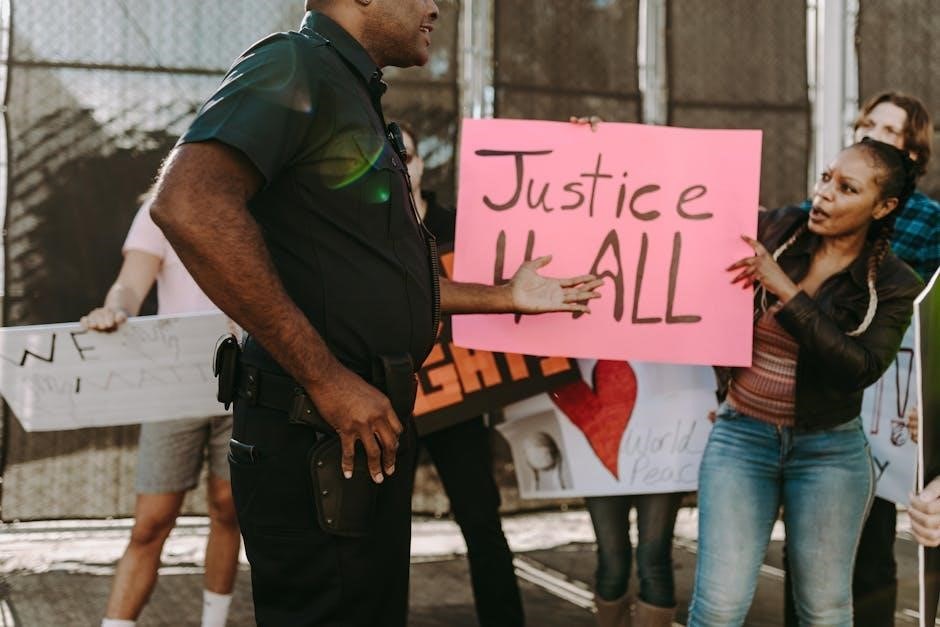
The First Amendment: Freedoms of Religion, Speech, Press, Assembly, and Petition
The First Amendment protects core freedoms: religion, speech, press, assembly, and petition—essential for a democratic society, as highlighted by resources like the Bill of Rights Institute.
Freedom of Religion: Establishment and Free Exercise Clauses
The First Amendment’s religion clauses are twofold. The Establishment Clause prevents government endorsement of religion, ensuring neutrality. Conversely, the Free Exercise Clause safeguards individuals’ rights to practice their faith without undue governmental interference. Resources from the Bill of Rights Institute and Rutgers Law School detail ongoing legal interpretations surrounding these clauses.
These interpretations navigate the delicate balance between separation of church and state and protecting religious liberty, often sparking debate regarding the extent of permissible government action and individual religious expression.
Freedom of Speech: Limitations and Protections
The First Amendment protects freedom of speech, but this right isn’t absolute. Protections extend to various forms of expression, yet limitations exist. Speech inciting violence, defamation (libel and slander), and obscenity aren’t fully protected.
Legal precedents, explored by resources like the Bill of Rights Institute, define these boundaries. The scope of protected speech continues to evolve, particularly concerning online expression and political advocacy, requiring careful consideration of context and potential harm.
Freedom of the Press: Role in a Democratic Society
A free press is vital for a functioning democracy, acting as a check on governmental power and informing the public. The First Amendment safeguards this freedom, enabling journalists to report on issues without fear of censorship.
Resources from Rutgers Law School and the Bill of Rights Institute detail the historical and legal foundations of press freedom. This includes protections against prior restraint and the ability to gather news, crucial for holding those in power accountable and fostering informed citizenry.
Right to Assemble and Petition the Government
The First Amendment guarantees citizens the right to peacefully assemble and petition the government for redress of grievances. This empowers individuals to collectively voice concerns and advocate for change without fear of reprisal.
Resources like the Bill of Rights Institute highlight how this right enables civic engagement and holds government accountable. Peaceful protests, lobbying, and contacting representatives are all protected forms of petitioning, essential for a responsive democracy.
The Second Amendment: The Right to Bear Arms
This amendment’s interpretation is historically debated, involving modern regulations and ongoing discussions about individual rights versus public safety concerns.
Historical Debate Surrounding the Second Amendment
The Second Amendment’s origins spark continuous debate, centering on whether it protects a collective right of states to maintain militias, or an individual’s right to own firearms. Early interpretations focused on militia service, essential for the new nation’s defense.
However, evolving societal needs and advancements in weaponry have fueled arguments for individual self-defense. Historical context reveals concerns about standing armies and governmental overreach, influencing the amendment’s drafting. Understanding these historical nuances is crucial for interpreting its modern application and legal challenges.
Modern Interpretations and Regulations
Contemporary legal battles revolve around the scope of the Second Amendment, particularly concerning regulations on firearm ownership. Landmark Supreme Court cases, like District of Columbia v. Heller (2008), affirmed an individual right to possess firearms for traditionally lawful purposes, like self-defense in the home.
However, this right isn’t unlimited. Regulations such as background checks, restrictions on certain types of weapons, and licensing requirements remain permissible, balancing individual rights with public safety concerns. Ongoing litigation continues to shape the boundaries of this right.
The Fourth Amendment: Protection Against Unreasonable Search and Seizure
This amendment safeguards individuals from unwarranted government intrusion, requiring warrants based on probable cause, supported by oath or affirmation, detailing the search location.
What Constitutes an Unreasonable Search?
Determining what qualifies as an “unreasonable search” is complex, evolving through court interpretations. Generally, it hinges on a person’s “reasonable expectation of privacy.” This means a search is presumed unreasonable unless justified by a warrant. However, exceptions exist. The “plain view” doctrine allows seizure of illegal items in open sight.
Consent waives Fourth Amendment protections. Furthermore, searches incident to a lawful arrest are permissible. The scope of a search must relate to the justification – it can’t be a fishing expedition. Courts balance individual privacy against legitimate government interests when evaluating reasonableness, considering the specific circumstances.
Warrant Requirements and Exceptions
A valid warrant requires probable cause, supported by oath or affirmation, and specifically describing the place to be searched and items seized. This prevents general “fishing expeditions.” However, numerous exceptions bypass the warrant requirement. These include consent searches, as previously mentioned, and exigent circumstances – emergencies demanding immediate action.
The “automobile exception” allows searches of vehicles with probable cause. “Stop and frisk,” based on reasonable suspicion, is another. Border searches have relaxed requirements. These exceptions, continually refined by courts, balance security needs with individual liberties, demonstrating the Fourth Amendment’s nuanced application.

The Fifth Amendment: Rights of the Accused
The Fifth Amendment safeguards against self-incrimination, protects against double jeopardy, ensures due process of law, and addresses eminent domain concerns.
Self-Incrimination and the Right to Remain Silent
The Fifth Amendment’s self-incrimination clause prevents individuals from being compelled to testify against themselves in a criminal case. This foundational right, often invoked with the phrase “pleading the Fifth,” ensures fairness during legal proceedings. It stems from the principle that the government bears the burden of proof, not the accused.
Individuals have the right to remain silent and are not obligated to provide information that could lead to their conviction. This protection extends to both direct testimony and any evidence derived from coerced self-disclosure, safeguarding against potential abuses of power during interrogation.
Double Jeopardy and Due Process
The Fifth Amendment safeguards against double jeopardy, preventing an individual from being tried twice for the same offense if initially acquitted or convicted. This protection ensures finality in criminal judgments and prevents repeated harassment by the government.
Furthermore, the Due Process Clause guarantees fair legal proceedings. This encompasses both procedural due process – fair procedures – and substantive due process – protection against arbitrary laws. It ensures fundamental fairness, requiring the government to respect all legal rights when depriving someone of life, liberty, or property.
Eminent Domain and Just Compensation
The Fifth Amendment addresses eminent domain, the government’s power to take private property for public use. However, this power isn’t absolute. The amendment mandates “just compensation” for the property owner. This means fair market value must be paid, ensuring individuals aren’t unfairly burdened by public projects.
Determining “just compensation” can be complex, often involving appraisals and potential legal challenges. This clause balances societal needs with individual property rights, preventing governmental overreach and protecting citizens from undue hardship during property acquisition.
The Sixth Amendment: Right to a Fair Trial
Guarantees a speedy, public trial with an impartial jury, and the right to counsel, ensuring a robust defense for those accused of crimes.
Right to Counsel (Attorney)
The Sixth Amendment explicitly secures the right to legal representation, meaning individuals facing criminal charges have the right to an attorney. This right extends to those who cannot afford one, as the state must provide counsel.
Sara, in a brainly.com example, demonstrates this right; she’s entitled to an attorney regardless of financial status. This ensures a fairer legal process, leveling the playing field against the prosecution’s resources. Effective assistance of counsel is crucial for navigating complex legal proceedings and protecting one’s rights throughout the trial.
Right to a Speedy and Public Trial
The Sixth Amendment guarantees a defendant’s right to a swift and open trial, preventing undue delays that could prejudice their case. This provision ensures accountability and transparency within the justice system, safeguarding against potential abuses of power.
A public trial allows for scrutiny and ensures fairness. Delays can harm a defendant’s ability to prepare a defense and may violate their constitutional rights. This right is fundamental to a just legal process, protecting individuals from prolonged uncertainty and potential oppression.
Right to Confront Witnesses
The Sixth Amendment’s Confrontation Clause grants the accused the right to face and question witnesses presented against them in court. This crucial element of a fair trial ensures the reliability of testimony and prevents reliance on hearsay or unsubstantiated claims.
Defendants can challenge witness credibility and expose potential biases. This right is vital for a robust defense, allowing for effective cross-examination and a more accurate determination of guilt or innocence. It’s a cornerstone of due process, protecting against wrongful convictions.

The Seventh Amendment: Right to a Jury Trial in Civil Cases
This amendment guarantees the right to a jury trial in federal civil cases exceeding a specific monetary value, ensuring fairness and citizen participation.
Civil vs. Criminal Trials
Understanding the distinction between civil and criminal trials is crucial. Criminal trials involve the government prosecuting an individual for violating laws, potentially leading to imprisonment. Conversely, civil trials address disputes between individuals or organizations, seeking monetary compensation or other remedies.
The Seventh Amendment specifically applies to civil cases, guaranteeing a jury trial when the amount in controversy exceeds a certain threshold. While both types of trials involve presenting evidence and legal arguments, the burden of proof differs significantly, impacting the outcome and consequences for those involved.
Jury Selection and Deliberation
The Seventh Amendment secures the right to a jury trial in many civil cases, but the process of assembling that jury is vital. Jury selection, or voir dire, aims to create an impartial panel. Potential jurors are questioned to uncover biases.
Once selected, jurors deliberate in private, reviewing evidence and applying the law as instructed by the judge. This deliberation requires consensus, and a unanimous verdict is often needed. The process underscores citizen participation in the justice system, ensuring fairness and accountability.

The Eighth Amendment: Protection Against Cruel and Unusual Punishment
This amendment prohibits excessively harsh penalties, sparking debate over capital punishment and what constitutes “cruel and unusual” within evolving societal standards.
Defining Cruel and Unusual Punishment
Determining what qualifies as “cruel and unusual punishment” isn’t static; it evolves alongside societal norms and understandings of human dignity. Historically, punishments considered acceptable—like public floggings—are now widely condemned. The Supreme Court assesses punishments based on evolving standards, considering the severity relative to the crime.
Factors include the punishment’s proportionality, whether it’s inflicted with unnecessary pain, and if it violates fundamental human decency. This assessment isn’t simply about what feels cruel, but a legal analysis grounded in contemporary values and constitutional principles, ensuring fairness and justice.
Capital Punishment Debate
The death penalty remains a deeply contentious issue under the Eighth Amendment. Proponents argue it serves as just retribution for heinous crimes and a deterrent to others, while opponents cite the risk of executing innocent individuals and question its moral justification.
Legal challenges often focus on the methods of execution, arguing they inflict unnecessary pain and suffering. The Supreme Court has placed restrictions on its application, particularly regarding defendants with intellectual disabilities or those who were juveniles at the time of the crime, reflecting evolving standards of decency.
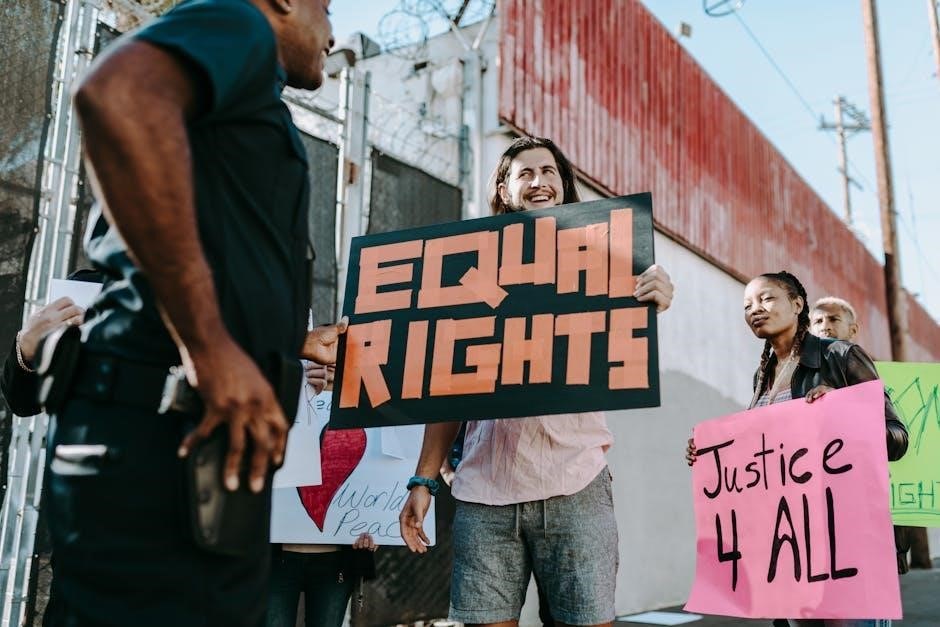
The Ninth Amendment: Non-Enumerated Rights
This amendment clarifies that rights not specifically listed in the Constitution are still retained by the people, safeguarding personal liberty and privacy.
Rights Retained by the People
The Ninth Amendment addresses a critical concern during the Constitution’s drafting: ensuring that listing specific rights wouldn’t imply others weren’t also protected. It explicitly states that the enumeration of certain rights in the Constitution shouldn’t be construed to deny or disparage others retained by the people.
This means individuals possess a broader spectrum of fundamental rights beyond those explicitly mentioned. These non-enumerated rights are vital for personal autonomy and evolving societal values. The amendment’s implications extend to areas like privacy, bodily integrity, and the right to make personal choices, even if not directly addressed in the Bill of Rights.
Implications for Privacy and Personal Liberty
The Ninth Amendment’s recognition of retained rights profoundly impacts the scope of privacy and personal liberty. While the Constitution doesn’t explicitly mention a “right to privacy,” the Supreme Court has interpreted the Ninth Amendment, alongside others, to support its existence.
This interpretation safeguards individual autonomy in personal matters, including reproductive choices, medical decisions, and freedom from unwarranted government intrusion. It acknowledges that individuals have zones of privacy central to personal dignity and self-determination, essential components of a free society.

The Tenth Amendment: Powers Reserved to the States
This amendment clarifies federalism, ensuring powers not delegated to the federal government, nor prohibited to the states, are reserved to state sovereignty.
Federalism and the Division of Powers
Federalism represents a core principle of the U.S. Constitution, dividing governmental authority between a national government and state governments. The Tenth Amendment explicitly reinforces this division, reserving powers not specifically granted to the federal level. This system aims to balance a strong central authority with the preservation of state autonomy and responsiveness to local needs.
Historically, debates surrounding federalism have centered on the appropriate scope of federal power, particularly concerning issues like commerce, defense, and individual rights. Understanding this dynamic is crucial for interpreting constitutional provisions and navigating the complexities of American governance.
State Sovereignty
State sovereignty, intrinsically linked to federalism, acknowledges the inherent powers and dignity of individual states within the American system. The Tenth Amendment safeguards these reserved powers, ensuring states retain control over matters not delegated to the federal government, nor prohibited to them.
This principle fosters diversity in laws and policies, allowing states to address unique regional concerns. However, the extent of state sovereignty remains a subject of ongoing legal and political debate, particularly when state laws conflict with federal mandates or constitutional rights.

Post-Bill of Rights Amendments: Expanding Civil Rights
Later amendments broadened rights, abolishing slavery (13th), ensuring equal protection (14th), granting voting rights (15th, 19th, 26th), and advancing liberty.
The Thirteenth Amendment: Abolition of Slavery
Ratified in 1865, the Thirteenth Amendment fundamentally altered the American landscape by abolishing slavery and involuntary servitude, except as punishment for a crime. This landmark amendment directly addressed the deeply ingrained institution that had plagued the nation since its inception. It represented a monumental step towards realizing the ideals of equality and freedom enshrined in the Declaration of Independence.
Prior to its passage, enslaved African Americans were considered property, denied basic human rights, and subjected to brutal conditions. The Thirteenth Amendment dismantled this system, paving the way for further civil rights advancements, though the struggle for full equality continued long after its ratification.
The Fourteenth Amendment: Equal Protection and Due Process
Ratified in 1868, the Fourteenth Amendment is a cornerstone of civil rights in the United States, guaranteeing due process and equal protection under the law to all citizens. This amendment reversed the Dred Scott decision and aimed to secure the rights of formerly enslaved people. It prohibits states from denying any person within their jurisdiction the equal protection of the laws.
The Due Process Clause ensures fair legal proceedings, while the Equal Protection Clause has been instrumental in landmark cases challenging discrimination based on race, gender, and other classifications.
The Fifteenth Amendment: Voting Rights
Ratified in 1870, the Fifteenth Amendment prohibits the denial or abridgment of the right to vote based on race, color, or previous condition of servitude. This landmark amendment aimed to enfranchise African American men after the Civil War, though its full implementation faced significant resistance through discriminatory practices like poll taxes and literacy tests.
Despite initial challenges, the Fifteenth Amendment laid the groundwork for expanding voting rights and remains a vital protection against racial discrimination in the electoral process.
The Nineteenth Amendment: Women’s Suffrage
The Nineteenth Amendment, ratified in 1920, granted American women the right to vote, marking a pivotal victory in the decades-long women’s suffrage movement. Activists like Susan B. Anthony and Elizabeth Cady Stanton tirelessly campaigned for this fundamental right, facing considerable opposition and societal norms.
This amendment fundamentally altered the American electorate and represented a significant step towards gender equality, though the fight for full voting access continued for many women of color.
The Twenty-Sixth Amendment: Lowering the Voting Age
Ratified in 1971, the Twenty-Sixth Amendment lowered the voting age to 18, spurred by the Vietnam War and the argument that if young men were old enough to fight for their country, they were old enough to vote. This amendment dramatically expanded the electorate, engaging a new generation in the democratic process.
Prior to this, states individually set voting ages, often at 21. The amendment reflects a broader movement for youth empowerment and political participation.

Resources for Further Study
Explore the Bill of Rights Institute, Gilder Lehrman, and Rutgers Law School LibGuides for in-depth analysis and comprehensive learning materials.
Bill of Rights Institute
The Bill of Rights Institute stands as a national leader in providing civic education resources. They offer extensive materials focused on the Bill of Rights and constitutional principles, aiding understanding of individual liberties. Their website features primary source documents, interactive lessons, and insightful analysis.
Specifically, the Institute breaks down each amendment, explaining its historical context and modern applications. They present the First Amendment’s clauses – establishment and free exercise – with clarity. This resource is invaluable for students and citizens seeking a deeper grasp of their rights.
Gilder Lehrman Institute of American History
The Gilder Lehrman Institute provides a comprehensive “Study Aid: The Bill of Rights,” offering a focused exploration of each amendment. This resource mirrors the Bill of Rights Institute’s approach, detailing the core principles enshrined within these foundational laws.
Like its counterpart, the Gilder Lehrman study aid specifically highlights the First Amendment, dissecting the clauses concerning religion, speech, press, assembly, and petition. It’s a valuable tool for students preparing for assessments or anyone wanting a concise overview of constitutional rights.
Rutgers Law School LibGuides ⎻ First Amendment
Rutgers Law School LibGuides offers specialized resources for First Amendment study, including “First Amendment Law in a Nutshell, 4th ed.” This provides a more in-depth, legal perspective on the amendment’s complexities.
These LibGuides are particularly useful for those seeking a nuanced understanding of landmark cases and evolving interpretations of free speech, religion, and press freedoms. They go beyond basic summaries, offering access to treatises and scholarly articles for advanced research.