Overview of the Canon R5C Manual
The Canon R5C Manual offers comprehensive guidance, covering camera basics, advanced features, and troubleshooting. It details setup steps, menu navigation, shooting modes, autofocus, and IBIS settings. The manual is available in PDF and printed formats, ensuring users have flexible access.Thanks.
Where to Find the Manual
The Canon R5C Manual can be accessed through several reliable channels. First, the official Canon website hosts a dedicated product page where users can download a PDF version for free. Simply navigate to the support section, enter the model number, and select the manual from the list of available documents. Many retailers and camera stores also provide printed copies of the manual, often included with the camera or available for purchase separately. Authorized Canon dealers frequently offer bundled packages that include the manual in a convenient booklet format. For those who prefer a digital copy on a portable device, the Canon Camera Connect app allows users to view the manual directly on smartphones or tablets after downloading the app from the App Store or Google Play. Additionally, reputable third‑party photography forums and websites sometimes host the manual for quick reference, but it is advisable to verify that the source is trustworthy to avoid outdated or incorrect information. Finally, local libraries or university media centers may keep a physical copy in their collections for public use. By exploring these options, owners can ensure they have the most up‑to‑date and accurate manual at hand. Owners can also download the manual in multiple languages, ensuring accessibility for international users. The manual also includes troubleshooting tips, firmware update procedures, and a comprehensive FAQ section. Download it today. for free. and enjoy now.
Formats Available (PDF, Printed)
Canon provides the R5C manual in both digital and physical forms to accommodate diverse user preferences. The PDF version is freely downloadable from Canon’s official support portal, where it is available in multiple languages and can be opened on any device with a PDF reader. This format is ideal for quick reference, as it allows users to search for specific terms, zoom in on diagrams, and bookmark sections for later review. Additionally, the PDF file is lightweight, making it easy to transfer via email or cloud storage, and it can be printed on demand for offline use. For those who prefer a tangible copy, Canon offers a printed manual that ships with the camera or can be purchased separately from authorized retailers. The hard‑bound booklet is printed on high‑quality paper, featuring durable covers and a layout that is optimized for easy navigation. It includes the same comprehensive content as the PDF, such as detailed explanations of camera settings, step‑by‑step shooting instructions, and troubleshooting tips. Users can also find the manual in Canon’s mobile app, which provides a convenient way to view the PDF on smartphones or tablets. Whether you choose the digital or printed format, the manual is designed to be user‑friendly, with clear headings, illustrative diagrams, and a consistent structure that helps both beginners and advanced photographers quickly locate the information they need. This manual guarantees efficient mastery of the R5C!

Initial Setup and Configuration
The Canon R5C starts with a simple power‑on sequence, then guides you through language, date/time, and region settings. Next, the camera auto‑detects compatible lenses, configures default image formats, and offers a quick‑start wizard to personalize shooting modes. The wizard also updates firmware
Powering On and First-Time Use
To begin, insert a fully charged battery and remove the protective cover. Press the power button located on the top right; the camera will display the welcome screen. Follow the on‑screen prompts to select your language, region, and date/time; The R5C will then automatically detect any attached lenses and recommend optimal autofocus profiles. Next, the camera will prompt you to insert a microSD card; choose a Class 10 or higher for full‑resolution recording. After confirming storage, the R5C will perform a quick calibration of its in‑body image stabilization (IBIS) system by moving the camera in a small circle. Once calibration completes, you will see a “Ready” indicator. The first‑time setup wizard will then guide you through selecting your preferred shooting mode (photo, video, or dual‑capture), setting image quality defaults, and enabling Wi‑Fi for remote control. Finally, the camera will check for firmware updates and prompt you to install any available patches. Completing these steps ensures the R5C is fully configured for optimal performance.
During the initial use, you may also want to review the built‑in tutorials accessible via the menu. These tutorials cover basic exposure controls, focus settings, and how to use the new dual‑capture feature that records both stills and video simultaneously. Additionally, the camera offers a “Setup” menu where you can customize button assignments, display preferences, and sensor‑cleaning schedules. By exploring these options early, you can tailor the R5C to your shooting style and streamline future sessions.
After the initial setup, it’s advisable to run the camera’s sensor‑cleaning routine, which can be accessed from the Maintenance menu. This routine helps prevent dust accumulation on the sensor, ensuring sharp images. You can also set up the camera’s time‑stamp format and customize the on‑screen display to show frame rates, battery status, and focus points. Finally, familiarize yourself with the camera’s quick‑dial settings to switch between shooting modes on the fly, making the R5C responsive during fast‑moving shoots.
Connecting to Wi‑Fi and Mobile Apps
To enable wireless connectivity, press the Menu button and navigate to the Wi‑Fi/NFC panel. Toggle the switch to ON; the camera will broadcast an SSID that appears in your phone’s Wi‑Fi list. Tap the SSID, enter the password displayed on the camera’s LCD, and confirm. Once connected, the R5C will automatically register with the Canon Camera Connect app, available on iOS and Android. Open the app, select Camera Connect, and follow the on‑screen prompts to pair the devices. After pairing, you can remotely control shutter release, adjust exposure settings, and preview live view on your mobile screen. The app also supports bulk image transfer, firmware updates, and the new dual‑capture mode, allowing you to preview stills and video frames simultaneously. For advanced users, the camera offers a Wi‑Fi Direct mode that bypasses a router, enabling direct device-to-device communication. To activate, choose Wi‑Fi Direct from the menu, then use the app’s Direct Connect feature. Remember to keep the camera’s firmware up to date to ensure compatibility with the latest app features and security patches. By mastering these steps, you can fully leverage the R5C’s wireless capabilities for efficient workflow and creative flexibility. Additionally, camera’s Wi‑Fi supports FTP transfer, enabling direct uploads to a network server. The app also offers a live‑streaming feature that can broadcast directly to platforms.!!!

Menu Navigation Basics
The R5C menu is organized into tabs—Setup, Image, Video, Custom, and System. Use the multi‑dial to scroll, press the center button to select, and the right/left arrows to adjust values. Long‑press for sub‑menus, and the Custom tab lets you assign quick‑access buttons. for all functions.
Menu Hierarchy and Customization
On the Canon R5C, the menu system is divided into five primary tabs: Setup, Image, Video, Custom, and System. Each tab contains sub‑menus that are further grouped into logical sections. The Setup tab handles camera settings such as language, date/time, and power‑saving options. The Image tab houses picture styles, white balance, and RAW file settings. Video offers codec selection, frame‑rate control, and audio input options. Custom allows users to assign functions to the dedicated buttons on the camera body, enabling quick access to frequently used settings. System covers firmware updates, network configuration, and storage management. Navigation is performed with the multi‑dial and the center button; the right/left arrows adjust values, and long‑pressing the center button opens sub‑menus. Customization is achieved by selecting the Custom tab, choosing a function, and assigning it to one of the five programmable buttons or the top‑right quick‑access button. Users can also create custom picture styles and save them for later use. The menu hierarchy is designed to be intuitive, with clear icons and descriptive labels, making it easy for both beginners and advanced users to locate and modify settings efficiently. Users can also customize the menu layout by rearranging tabs, creating shortcuts, and saving multiple profiles for different shooting scenarios, ensuring that the most relevant tools are always within arm’s reach during critical moments.!
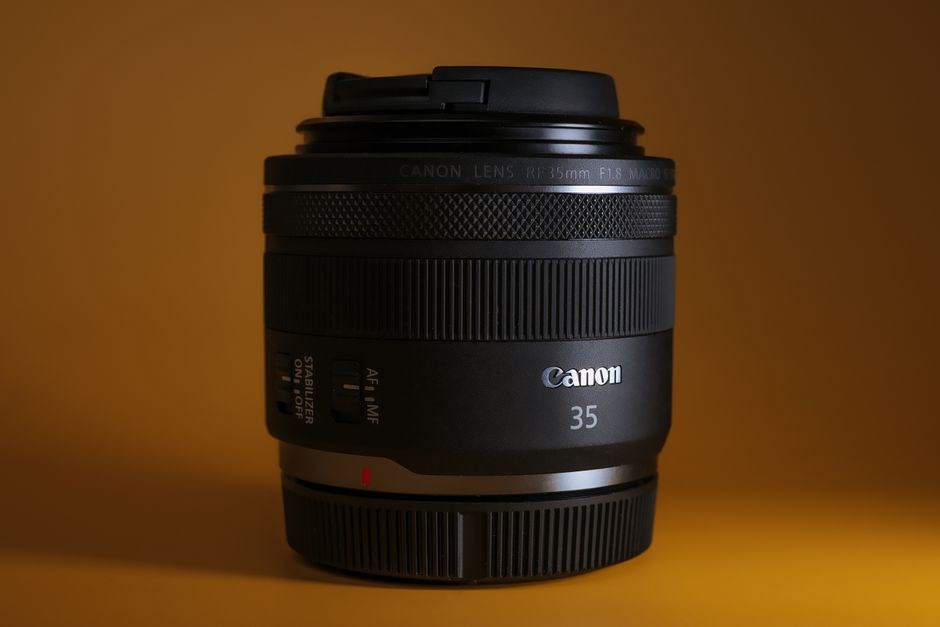
Quick Access Buttons and Functions
The Canon R5C features a suite of quick‑access buttons that streamline workflow. The top‑right button, when pressed, opens the Quick Menu, giving instant access to settings such as ISO, white balance, picture style, and exposure compensation. The camera also offers five programmable buttons on the back: the top‑left, top‑right, bottom‑left, bottom‑right, and the center button. Each can be assigned to functions like autofocus mode, drive mode, flash control, or custom picture styles. Users can also set the center button to toggle between photo and video modes, or to launch the camera’s playback screen. Additionally, the R5C includes a dedicated “Custom” button that can launch a pre‑defined menu or a specific function such as “Movie Start/Stop.” The camera’s menu allows users to create multiple button profiles, enabling quick switching between shooting scenarios. For example, a portrait profile might assign a high‑resolution RAW mode to the top‑left button, while a sports profile could assign a continuous autofocus and high‑speed burst to the same button. The Quick Menu can be customized to display only the most frequently used items, reducing on‑screen clutter. The R5C’s touchscreen also supports tap‑to‑focus and tap‑to‑exposure, allowing users to adjust focus points and exposure compensation directly on the viewfinder. These features collectively reduce the need to navigate deep into menus, thereby improving shooting efficiency in fast‑moving situations. All features are easy.

Shooting Modes and Settings
The Canon R5C offers versatile shooting modes: single shot, continuous, time‑lapse, and 4K/8K video. Users can toggle between RAW, JPEG, and RAW+JPEG, adjust exposure compensation, white balance, and picture style. Custom profiles save settings for quick access. Press the menu button to customize.
Photo Shooting Modes and Settings
Canon R5C’s photo shooting modes provide photographers with a wide array of creative options. The camera supports standard modes such as Manual, Aperture Priority, Shutter Priority, and Program, each offering granular control over exposure parameters. For dynamic scenes, the Intelligent Auto mode automatically selects the best combination of settings, while the Creative Zone mode allows users to apply preset creative styles like Portrait, Landscape, or Night. The R5C also features a dedicated RAW mode that captures unprocessed sensor data, preserving maximum detail and enabling extensive post‑processing flexibility. JPEG and RAW+JPEG options are available for quick sharing or backup. Exposure compensation can be adjusted in 1/3‑stop increments, and the camera’s built‑in histogram displays real‑time exposure data. White balance presets include Auto, Daylight, Cloudy, Tungsten, Fluorescent, and Kelvin scale adjustments, with a custom white balance option for precise color accuracy. Picture styles such as Standard, Portrait, Landscape, Neutral, Faithful, and Monochrome can be selected and fine‑tuned for contrast, saturation, and sharpness. The camera’s built‑in custom picture style feature allows users to save their preferred settings for rapid application. Additionally, the R5C offers a “Creative Zone” mode that automatically applies a chosen style while still allowing manual adjustments. The camera’s built‑in Wi‑Fi and Bluetooth connectivity enable remote control and instant image transfer to compatible devices via Canon’s Camera Connect app. The R5C’s advanced metering modes—evaluative, center‑weighted, and spot—provide accurate exposure in challenging lighting conditions. The camera’s built‑in focus‑shift detection and face‑recognition autofocus systems ensure sharp images in both static and moving subjects. The R5C supports custom presets for quick scene shift today!
Video Shooting Modes and Settings
The Canon R5C offers a versatile range of video shooting modes, including 4K 60p, 4K 120p, 8K 30p, and Full HD 120p, allowing filmmakers to capture high‑resolution footage with smooth motion. The camera supports various frame rates and bit depths, such as 10‑bit 4:2:2 and 12‑bit RAW, ensuring rich color fidelity and extensive post‑production flexibility. The R5C’s internal recording formats include MP4, MOV, and RAW, with options for 4K 60p at 10‑bit 4:2:2 and 8K 30p at 12‑bit RAW. The camera’s built‑in Canon Log and HDR PQ profiles provide a wide dynamic range, while the Log 2 and Log 3 curves allow precise color grading. The R5C’s Dual Pixel CMOS AF system tracks subjects in real time, and the 10‑frame burst mode captures high‑speed action. The camera’s 5‑axis In‑Body Image Stabilization (IBIS) reduces shake during handheld shooting, and the external 3‑axis gimbal can be paired for even smoother footage. The R5C supports external microphones and headphone monitoring, with a 3.5mm mic input and a 3.5mm headphone output. The camera’s audio levels can be manually adjusted, and the built‑in 48‑bit audio recorder captures high‑quality sound. The R5C’s live‑view mode offers a 4K 60p preview, and the touchscreen allows quick adjustments of exposure, focus, and white balance. The camera’s built‑in Wi‑Fi and Bluetooth enable remote control and instant file transfer to mobile devices. The R5C’s advanced metering and exposure controls, combined with its high‑resolution sensor, make it a powerful tool for professional video production.
The R5C’s recording bitrate options range from 100 Mbps to 200 Mbps in 4K, and up to 400 Mbps in 8K, providing ample data for color grading. Users can choose between 24, 25, 30, 48, 50, 60, 120, and 240 fps for 4K, and 24, 25, 30 fps for 8K, enabling slow‑motion effects. The camera’s time‑code sync and external recorder support allow multi‑camera setups.!!!!!!!
Autofocus and Image Stabilization
The Canon R5C features Dual‑Pixel CMOS AF with 1,053 points, offering real‑time eye‑AF and subject tracking. Its 5‑axis IBIS delivers up to 8 stops of stabilization, effective in both photo and video modes. Custom AF zones, face‑detect, and manual focus assist enhance versatility. 10‑bit 4:2:2.
AF Modes and Lens Compatibility
The Canon R5C offers a versatile array of autofocus options tailored to diverse shooting scenarios. In still‑picture mode, the camera provides One‑Shot AF for stationary subjects, AI Servo AF for moving targets, and AI Focus AF for a hybrid approach that switches between the two as needed. Live‑View and video modes feature Continuous AF, with the option to lock focus via the AF‑Lock button or the dual‑touch screen. The camera supports a full 1,053‑point Dual‑Pixel CMOS AF system, delivering pixel‑perfect focus across the frame, and includes Eye‑AF for humans, subject‑tracking modes like Face‑Detect, and Face‑Tracking! For macro work, the 1‑point AF mode ensures precise focus on small subjects. Lens compatibility is extensive: the camera accepts all Canon EF‑mount lenses, all RF‑mount lenses, allowing seamless use of legacy lenses with the high‑resolution sensor. The EF‑RF adapter also supports full autofocus performance and image stabilization. When using EF lenses, the camera automatically detects the lens type and applies the appropriate AF algorithm. The R5C’s AF system is fully integrated with the 5‑axis IBIS, enabling smooth handheld shooting even at long focal lengths. Users can customize AF settings via the menu, selecting AF‑Area modes (Wide, Zone, Large, Small, Spot) and adjusting AF‑Sensitivity for optimal performance in low‑light conditions. Overall, the Canon R5C delivers a powerful AF system that caters to professionals and enthusiasts.!
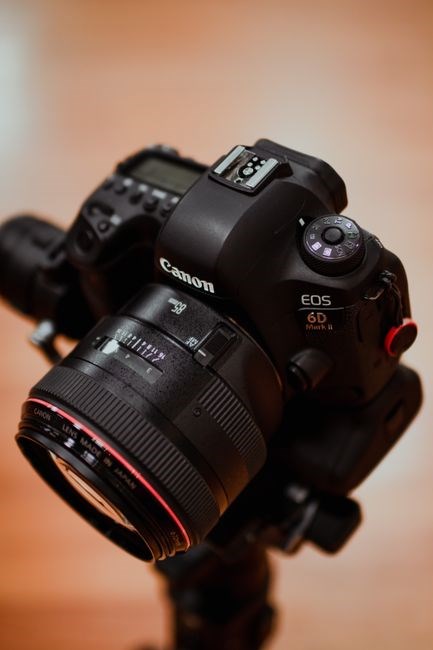
In-Body Image Stabilization (IBIS) Settings
The Canon R5C’s IBIS system is designed to complement lens‑based IS, delivering up to 8 stops of shake reduction in stills and 6 stops in video. Users toggle IBIS via the “IBIS” menu, choosing between “Standard” for everyday shooting and “Extended” for maximum stabilization with long‑telephoto lenses. The camera automatically detects whether the attached lens has built‑in IS and scales the IBIS contribution accordingly, preventing over‑compensation. In live‑view and video, the IBIS can be locked to a specific frame using the “IBIS Lock” button, useful when shooting on a tripod or with a fixed framing. Advanced users can run the “IBIS Calibration” routine from the menu; this routine measures mechanical drift and recalibrates the sensor axes, which is important after transport or a significant temperature change. The R5C’s IBIS is calibrated to work with EF‑RF, RF, and EF lenses via the EF‑RF adapter, providing consistent performance across the Canon ecosystem. Firmware updates may refine the stabilization algorithms, offering smoother performance. The R5C’s IBIS system is a cornerstone of its versatility, offering robust stabilization for both still photography and high‑resolution video. By detecting motion across five axes—horizontal, vertical, depth, pitch, yaw, and roll—the system shifts the sensor to counteract camera shake in real time. This capability is especially valuable when shooting handheld or with lenses lacking built‑in IS, and it can also be combined with lens‑based stabilization for an even greater effect. Users can fine‑tune the IBIS strength from the menu, selecting a lighter or stronger setting based on shooting conditions. The camera’s firmware is regularly updated to reduce latency and improve motion‑compensation algorithms. When shooting RAW, the IBIS data is embedded in the metadata, enabling post‑processing software to fine‑adjust stabilization if needed. The “IBIS‑Only” mode disables lens IS entirely, which is useful in low‑light or when lens IS may introduce lag. The R5C’s IBIS is calibrated to work with EF‑RF, RF, and EF lenses via the EF‑RF adapter, providing consistent performance across the Canon ecosystem. Users can monitor IBIS performance in the status menu, where real‑time sensor‑axis data is displayed, allowing quick diagnostics if stabilization feels sluggish. The “IBIS Calibration” routine can be run from the menu to recalibrate the sensor axes after transport or a significant temperature change, ensuring optimal performance.